Shopping for a Lake Leelanau getaway and wondering if your loan size puts you in jumbo territory? You’re not alone. Second-home buyers often find the financing rules feel different once you cross certain loan limits. The good news is you can plan ahead and navigate the process with confidence.
In this guide, you’ll learn what counts as a jumbo loan in Leelanau County, what lenders typically require for second homes, how lakefront features affect appraisals and underwriting, and how to keep your timeline on track from anywhere. Let’s dive in.
What counts as a jumbo in Leelanau County
A jumbo mortgage is any loan amount that exceeds the conforming loan limit set each year by the Federal Housing Finance Agency. Conforming loans can be purchased by Fannie Mae or Freddie Mac. Loans above the county limit are considered jumbo and follow investor or portfolio lender rules.
To see whether your price point is jumbo for Leelanau County, check the current FHFA county-by-county conforming loan limit for the year you plan to buy. Because limits adjust annually, confirm the number before you write an offer.
Jumbo status matters because lenders set their own underwriting guidelines. Rates are often a bit higher than conforming loans, and rules for second homes can be stricter. Think of Fannie and Freddie guidance as a baseline, but expect lender-specific requirements for jumbo loans.
What lenders look for on second-home jumbos
Credit and pricing
Most jumbo lenders want strong credit for second homes. Many look for scores in the 700 to 760 range, with best pricing often starting around 720 and higher. Lower scores can still qualify, but you may see higher rates and larger reserve needs.
Interest rates on jumbos usually track slightly higher than conforming loans. Your exact rate depends on your credit, down payment, loan size, and the lender type, such as a portfolio bank versus a wholesale lender.
Down payment and LTV
For second-home jumbos, plan on a 10 to 20 percent down payment, with 20 percent being a common standard. Lenders price and approve in tiers. You may see different terms at 80 percent loan-to-value versus 85 to 90 percent. Ask your lender to outline their LTV bands and how pricing shifts at each level.
Reserves and DTI
Many jumbo programs require 6 to 12 months of reserves for second homes. Reserves are liquid, verifiable assets that cover your total mortgage payment, including principal, interest, taxes, and insurance. Larger loans or higher debt-to-income ratios may push reserves higher.
Typical maximum debt-to-income ratios fall from the mid-40s to low-50s. Strong compensating factors like high reserves, excellent credit, and lower LTV can help if your DTI is near the top of a lender’s range.
Documentation and income
Jumbo loans are full documentation. Be ready with recent pay stubs, W-2s, and tax returns. If you are self-employed, lenders usually want two years of full tax returns. Bank and asset statements must be clear, seasoned, and explain any large deposits. Some lenders allow gift funds on second homes, but you will likely need to contribute some of your own funds. Confirm exact rules with your lender.
Property and appraisal factors on Lake Leelanau
Appraisals for waterfront homes
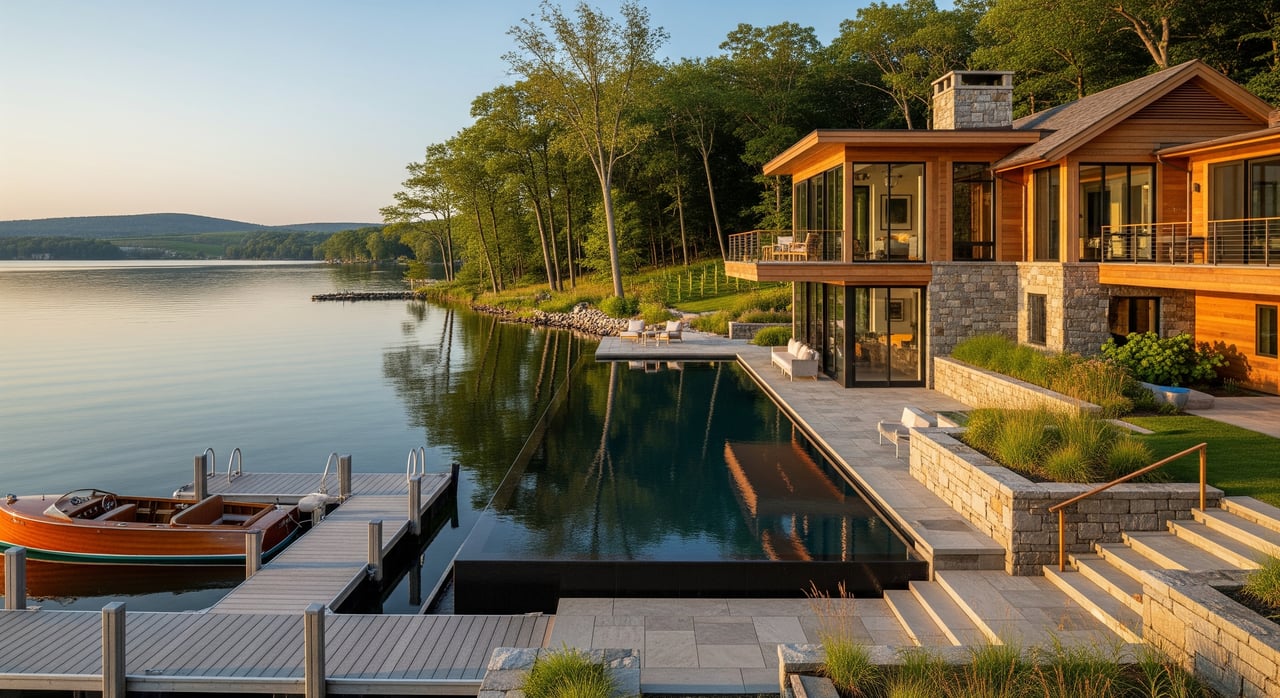
Lake Leelanau has a mix of year-round homes, seasonal cottages, and high-value lakefront properties. Because true lakefront sales can be limited, appraisers need experience selecting comparable sales across seasons and shoreline segments. Scheduling and completing a full interior and exterior appraisal can take longer than average. Build in extra time for unique or high-end properties.
Septic, wells, and utilities
Many lake properties rely on private wells and septic systems. Lenders often require inspections, certifications, or proof of acceptable condition. Older septic systems, unknown permits, or capacity concerns can trigger lender conditions or repairs before closing. Confirm winterization and year-round livability. Properties lacking utilities or suitable heat can be ineligible for conventional second-home financing.
Shoreline rights, easements, and flood
Shoreline rights, association rules, and easements affect value and insurability. Clear title to access, docks, or shared paths should be verified during title review. Lenders and insurers pay close attention to flood risk and shoreline erosion. If the home lies in a FEMA flood zone that requires coverage, flood insurance will be required. Ask your insurance agent for early quotes so you can account for costs.
Occupancy and rental plans
A second home is meant for your personal use. Many jumbo lenders limit frequent short-term rentals. If you plan occasional rentals, disclose this upfront. If the property will be used primarily as a short-term rental, lenders often classify it as an investment property with different requirements.
Timeline and remote closing tips
Typical timeline to close
Jumbo second-home financing usually takes longer than a simple conforming loan. Plan for:
- Pre-approval: 2 to 5 business days once you submit full documents.
- Appraisal: 1 to 3 weeks, possibly longer for waterfront homes with limited comps.
- Underwriting to clear-to-close: 2 to 3 weeks after appraisal, sometimes longer if additional documentation is needed.
- Total contract to close: 30 to 60 days is common. For lakefront or complex properties, allow 45 to 75 days.
Setting realistic deadlines in your offer helps manage expectations with the seller. Ask your lender about current appraisal turnaround times in Leelanau County before you finalize contingency dates.
Remote document coordination
Most lenders and title companies support e-signatures and secure digital document delivery. Confirm early which items can be e-signed and which require in-person or notarized signatures. If you are out of the area, your agent can coordinate access for appraisers and inspectors and help keep documents moving between parties.
Closings can be hybrid, mail-away, remote online notarization where available, or in-person at a local title office. Ask your title company what options are supported in Leelanau County so you can plan travel accordingly.
Wire fraud precautions
Use phone verification from known, trusted numbers to confirm wiring instructions before sending funds. Avoid relying on email instructions alone. Title companies and lenders follow established security practices to protect you. Build in time for these safeguards so last-minute transfers do not create delays.
What to do first
- Confirm whether your target price puts you above the current FHFA conforming limit for Leelanau County.
- Speak with one or two lenders that regularly do second-home jumbos and ask about down payment, reserves, and rental restrictions.
- Gather your documents and get a strong pre-approval before touring homes.
- Engage an insurance agent early for lakefront quotes, including flood if applicable.
- Partner with a local agent who can coordinate appraisals, inspections, and title work on your behalf.
Lender-ready checklist
Have these documents ready before your first lender call:
- Photo ID and Social Security number.
- Two most recent pay stubs, if applicable.
- Two years of W-2s and full federal tax returns, or 1099s if self-employed.
- Two months of bank statements for all liquid accounts.
- Statements for retirement and investment accounts for reserves.
- A list of monthly debts and payments.
- HOA documents if the home is in an association.
- A copy of the purchase agreement once you are under contract.
Smart questions to ask your lender
- Is my requested loan amount above the current conforming limit for Leelanau County, and what jumbo options do you offer?
- What is the minimum down payment for a second-home jumbo, and how does pricing change at 80, 85, or 90 percent LTV?
- How many months of reserves are required at my loan size and LTV?
- What credit score is needed for your best pricing, and are there overlays for second homes?
- Do you allow gift funds for the down payment, and if so, how much must come from my own funds?
- Are short-term rentals allowed under your second-home product, and what documentation is required if I rent occasionally?
- What appraisal type do you require here, and what is your typical turnaround in Leelanau County?
- Do you support e-signatures and remote closing? What steps do you require to prevent wire fraud?
- What timeline should I plan for underwriting and clear-to-close?
- What property issues common on Lake Leelanau, such as septic, wells, shoreline easements, or flood zones, could trigger exceptions or conditions?
How Team Shimek helps you succeed
Buying a second home on Lake Leelanau should feel exciting, not complicated. You deserve a team that knows the shoreline segments, understands appraisal realities, and can keep your process moving while you are out of town. As locally rooted specialists, we coordinate with lenders, appraisers, inspectors, and title to help you avoid delays.
Our guidance covers the practical details that matter in this market: verifying septic and well status, clarifying shoreline rights and association rules, and anticipating the appraisal and insurance items that often affect jumbo approvals. We also help you set realistic contingency dates, line up access for vendors, and keep communication clear between all parties so your closing stays on track.
When you are ready to explore Lake Leelanau second homes, connect with Team Shimek to map your financing path, refine your search, and move forward with confidence.
FAQs
What is a jumbo loan for a Lake Leelanau second home?
- A jumbo is any mortgage that exceeds the FHFA conforming loan limit for Leelanau County for the current year, so you should check that limit before you shop.
How much down payment do I need for a jumbo second home?
- Many lenders require 10 to 20 percent down for second-home jumbos, with 20 percent being a common benchmark depending on credit and loan size.
How many reserves do lenders typically require on jumbos?
- Plan for 6 to 12 months of total mortgage payments in verifiable liquid assets, with higher reserves possible for larger loans or higher DTI.
Can I use short-term rentals to qualify for a Lake Leelanau second home?
- Many lenders restrict frequent short-term rentals for second-home loans; if rentals are primary use, the loan is often treated as an investment with different rules.
How long does a jumbo closing take on a lakefront property?
- Expect 30 to 60 days in typical cases and 45 to 75 days for unique or high-value lakefront homes due to appraisal and property-specific reviews.
Do I need a local Michigan lender for a jumbo second home?
- Not necessarily, but working with a lender experienced in Leelanau County and lakefront appraisals can reduce surprises and help keep your timeline realistic.