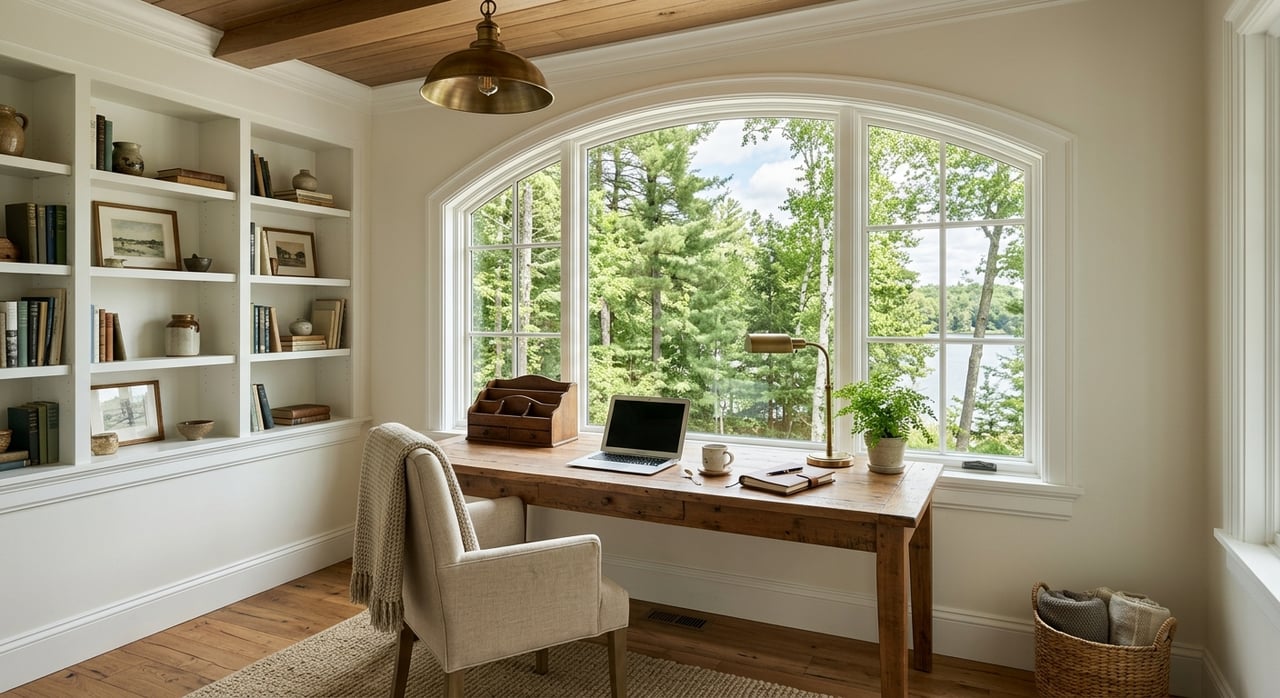
Remote work gives you more freedom, but it also raises a big question: where should you live if you want both a comfortable home and an easy daily routine? In Traverse City, the answer depends on how you want your week to feel, whether that means walking to coffee and coworking, biking to errands, or settling into a quieter area with trail access nearby. This guide breaks down the best Traverse City areas for remote workers so you can compare lifestyle, convenience, and housing fit with more confidence. Let’s dive in.
Why Traverse City Works for Remote Workers
Traverse City has several features that make it a strong fit for remote work. The city reports broad broadband availability, including ADSL, cable, fiber, fixed wireless, and satellite, and says nearly the entire city is covered by four or more fixed residential broadband providers. That gives you a solid starting point if reliable internet is high on your list.
At the same time, address-level homework still matters. TCLPfiber launched downtown and continues to expand neighborhood by neighborhood, so internet options can vary from one property to the next. If you work from home full time, verifying service at the exact address should be part of your search from day one.
Traverse City also stands out because the city publishes neighborhood indicators for transit access, food access, healthcare access, park access, walk score, and bike score. That makes it easier to compare areas using real data instead of guesswork. For remote workers, those everyday details can shape how easy and enjoyable life feels outside your front door.
What Remote Workers Should Prioritize
Before you narrow down neighborhoods, think about what your workweek actually requires. Some buyers need quick access to downtown coworking and coffee shops, while others mostly want space, quiet, and strong home internet.
A few practical priorities usually matter most:
- Reliable internet at the exact address
- Easy access to coworking or meeting space
- Walkability for coffee, errands, or lunch breaks
- Bike access and trail connections
- Transit options for a car-light lifestyle
- A home type that matches your routine, from condos to single-family homes
Traverse City’s housing plan notes that much of the local housing stock is older and that the market is dominated by single-family detached homes, condominiums, and larger multifamily units. The same report notes a 2022 median home value of $340,600. That context can help you think realistically about tradeoffs between location, maintenance, and home style.
Best Areas Near Downtown
If you want the shortest commute to coworking spaces, dining, and daily services, the best fit is usually in or near the urban core. These neighborhoods combine strong access scores with a more connected day-to-day lifestyle.
Central Neighborhood
Central Neighborhood is one of the strongest choices for remote workers who want to be close to the action. The city’s indicators show 100% transit, food, healthcare, and park access, along with a walk score of 88 and a bike score of 95. If you want to work from home without feeling isolated, this area gives you a very connected base.
The neighborhood also has a distinct in-town feel. The city describes Hannah Park here as historic and located on the Boardman River, which adds to the close-in, urban-riverfront setting. For buyers who want to step outside and have options right away, Central is tough to beat.
Old Towne
Old Towne is another top pick if you want downtown access with a mixed-use feel. The city describes it as a bridge between downtown and the residential grid, with low-intensity commercial uses along Union and Eighth, a mix of single-family and multi-family housing, and newer condominium development along Eighth Street.
Its numbers are strong too, with 100% transit, food, healthcare, and park access, plus a walk score of 88 and a bike score of 94. If your ideal routine includes walking to a meeting, grabbing coffee, and getting back home without much driving, Old Towne makes a lot of sense. The Old Towne Parking Deck also adds flexibility if you still use a car part of the time.
Boardman
Boardman works well if you want to stay close to downtown but prefer a slightly quieter residential setting. The city describes it as the first residential area next to downtown and notes its ornate Victorian character, giving it a more established neighborhood feel.
Boardman still performs very well for convenience, with 100% transit, food, healthcare, and park access, a walk score of 76, and a bike score of 88. F&M Park sits in the heart of the neighborhood, which adds another everyday quality-of-life benefit. For many remote workers, Boardman hits a sweet spot between access and calm.
Best Areas for Balance
Not every remote worker wants to live in the middle of downtown activity. If you want a neighborhood feel while staying connected to city amenities, these areas offer a more balanced option.
Oak Park
Oak Park is one of the best all-around choices for buyers who want walkability without the busiest downtown setting. The city’s master plan describes it as quiet and walkable near downtown, with historic homes, well-connected sidewalks on State, Washington, Webster, and nearby cross streets, plus the TART Trail along Railroad Avenue.
Its neighborhood indicators are strong, with 100% transit, food, healthcare, and park access, a walk score of 73, and a bike score of 90. F&M Park also helps connect Oak Park and Boardman. If you want a practical daily routine with a little more breathing room, Oak Park deserves a close look.
Traverse Heights
Traverse Heights may appeal to buyers who want a more residential setting and do not mind being a bit farther from the downtown core. The city identified it as underserved with pedestrian connectivity and has targeted the area for sidewalk gap and infill work, which signals ongoing attention to walkability.
The neighborhood still posts 100% transit, food, healthcare, and park access, along with a walk score of 66 and a bike score of 82. Its boundaries also show how close it is to Garfield, Eighth Street, and the east edge of Boardman Lake. For remote workers who want a residential feel with city access still nearby, it can be a smart option.
Best Areas for Low-Maintenance Living
If you travel often, want less exterior upkeep, or simply prefer a lock-and-leave setup, condo-friendly areas may be the best fit.
Midtown Centre
Midtown Centre Condominium Neighborhood is the city’s clearly condo-focused neighborhood association. That makes it one of the most obvious in-town choices if you want low-maintenance ownership in the urban core rather than a property with a larger yard and more upkeep.
This can be especially appealing for remote workers who split time between Traverse City and another location. It can also work well if you want to stay close to downtown routines while keeping home maintenance simple.
Condo Pockets in Old Towne
Old Towne also deserves attention if condo living is on your list. The city specifically notes newer condominium development along Eighth Street, which gives buyers another downtown-adjacent option.
If your priorities include convenience, a smaller footprint, and easy access to daily services, condo pockets in and around Old Towne can offer a strong mix of lifestyle and practicality.
Best Areas for Quiet and Trails
Some remote workers spend most of the day at home and care less about walking to meetings. If your ideal setup leans more peaceful, scenic, and outdoors-oriented, these areas stand out.
Grand Traverse Commons
Grand Traverse Commons is one of the best near-city options if you want more trail access without leaving the Traverse City orbit. The city describes it as a 140-acre natural area near the heart of Traverse City with 50 miles of trail, and notes that The Village at Grand Traverse Commons to the east mixes retail, office, and residential uses.
That combination can be very attractive for remote workers. You get a quieter setting with nature close by, but you still stay connected to services and city life. For buyers who want room to breathe without feeling far removed, this area offers a compelling middle ground.
Bayline Corridor
The Bayline corridor is another strong choice if you want waterfront-adjacent living with easy access to key destinations. BATA says the free Bayline links the East Bay Beach District, downtown Traverse City, Grand Traverse Commons, and Meijer, with 15-minute weekday frequency for much of the day.
That kind of transit connection matters if you want to cut down on driving. For remote workers, it can mean easier trips to coworking, errands, and social plans while living outside the busiest downtown blocks.
Coworking Spaces That Shape the Search
If you like to mix home office days with shared work space, Traverse City gives you a few useful options. Where these spaces are located can help you choose the right side of town.
Here are three key coworking options mentioned in the research:
- 20Fathoms at 10850 E. Traverse Hwy, Suite 4400, offers day passes, conference rooms, and free onsite parking
- Grove at 414 E. Eighth Street offers day passes, multi-day packs, private offices, phone booths, fast fiber internet, coffee, and weekday access
- SPACE at 120 E. Front Street offers shared work areas, phone booths, a cafe, conference-room access, and mailbox services
If coworking will be part of your weekly routine, Central, Old Towne, and Boardman are often the easiest fit for a shorter, car-light commute. That conclusion lines up with the downtown or near-downtown locations of these spaces and the strong neighborhood access scores nearby.
How to Choose the Right Fit
The best Traverse City area for remote work depends on what kind of convenience matters most to you. A buyer who wants to walk to shared work space may not choose the same neighborhood as someone who wants trail access and a quieter setting.
A simple way to narrow your list is to match neighborhoods to your daily rhythm:
- For coworking and downtown access: Central, Old Towne, Boardman
- For a balanced neighborhood feel: Oak Park, Traverse Heights
- For low-maintenance condo living: Midtown Centre, parts of Old Towne
- For quieter, trail-rich living: Grand Traverse Commons, Bayline corridor
The final step is practical, not glamorous. Check internet service by exact address, test your likely routes to downtown or coworking, and compare housing style with how you actually want to live. Those details usually make the difference between a home that looks good on paper and one that truly supports your workday.
If you are planning a move and want help comparing neighborhoods, condos, or homes that fit your remote-work lifestyle, Team Shimek can help you narrow the options and find the right fit in Traverse City.
FAQs
What Traverse City neighborhood is best for walking to coworking spaces?
- Central, Old Towne, and Boardman are among the strongest options because they are close to downtown coworking locations and score well for walkability, bike access, and transit.
What Traverse City area is best for low-maintenance condo living?
- Midtown Centre is the clearest condo-focused option in the city, and Old Towne also has newer condominium development along Eighth Street.
What Traverse City neighborhoods offer a good balance for remote workers?
- Oak Park and Traverse Heights are strong choices if you want a residential feel with access to transit, parks, and everyday services.
What Traverse City area is best for trails and a quieter setting?
- Grand Traverse Commons stands out for buyers who want a quieter environment with extensive trail access while staying near the city.
What should remote workers verify before buying a home in Traverse City?
- You should verify internet service at the exact address, since fiber availability is still expanding neighborhood by neighborhood even in a strong overall broadband market.